
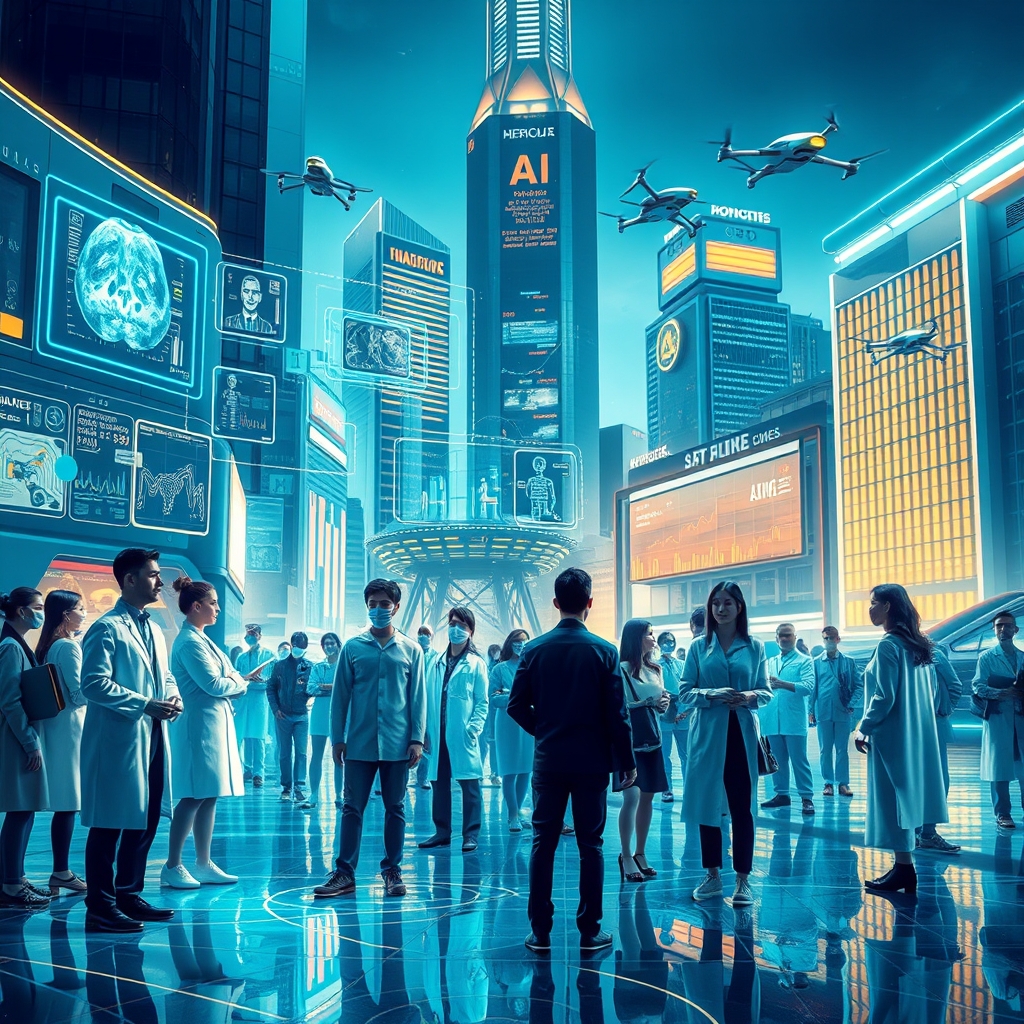
Artificial Intelligence has evolved from a futuristic concept into a transformative force shaping industries, economies, and daily life. What was once confined to science fiction is now a tangible reality, driving breakthroughs that were unimaginable just a decade ago. From healthcare to finance, education to entertainment, AI innovations are not just enhancing efficiency—they are redefining the boundaries of human potential. As we stand on the precipice of this technological revolution, it’s worth exploring how these advancements are unfolding and what they mean for the future.
The Rise of AI in Healthcare: Saving Lives with Precision
One of the most profound impacts of AI innovations can be seen in healthcare, where machine learning and deep learning algorithms are revolutionizing diagnostics, treatment, and patient care. AI-powered tools like IBM Watson and Google DeepMind are analyzing vast datasets to detect diseases such as cancer, Alzheimer’s, and cardiovascular conditions with unprecedented accuracy. These systems can identify patterns in medical imaging, genetic data, and patient histories that might elude even the most experienced human doctors.
For instance, AI-driven radiology tools are now capable of detecting early-stage tumors in X-rays and MRIs, often before symptoms manifest. This early detection is critical, as it significantly improves survival rates and reduces the need for invasive treatments. Beyond diagnostics, AI is also accelerating drug discovery by simulating molecular interactions and predicting how new compounds will behave in the human body. This not only speeds up the development of life-saving medications but also reduces costs, making healthcare more accessible to millions.
Personalized Medicine: Tailoring Treatment to the Individual
Perhaps one of the most exciting AI innovations in healthcare is the shift toward personalized medicine. Traditional medical treatments often follow a one-size-fits-all approach, but AI is changing that by enabling treatments tailored to an individual’s genetic makeup, lifestyle, and environment. Companies like Tempus and Flatiron Health are leveraging AI to analyze patient data and recommend customized treatment plans, particularly in oncology. By considering factors such as genetic mutations, tumor characteristics, and even a patient’s microbiome, AI can suggest therapies that are more likely to succeed, minimizing trial-and-error approaches and improving outcomes.
AI in Finance: Smarter Decisions, Greater Security
The financial sector has long been a pioneer in adopting AI innovations, and its influence continues to grow. AI-driven algorithms are now the backbone of high-frequency trading, where milliseconds can mean the difference between profit and loss. These systems analyze market trends, news articles, and even social media sentiment in real-time to make split-second trading decisions. Beyond trading, AI is also transforming risk assessment, fraud detection, and customer service in banking.
Fraud Detection and Cybersecurity
Financial fraud is a multi-billion-dollar problem, but AI is providing a powerful line of defense. Machine learning models can detect anomalous transactions by learning a user’s typical spending patterns and flagging deviations in real-time. For example, if a credit card is suddenly used for a large purchase in a foreign country, AI can instantly recognize this as unusual behavior and alert the cardholder or block the transaction. Similarly, AI is bolstering cybersecurity by identifying vulnerabilities in financial systems and predicting potential threats before they materialize. Companies like Darktrace and Feedzai are at the forefront of this battle, using AI to stay one step ahead of cybercriminals.
Enhancing Customer Experience with Chatbots and Virtual Assistants
Customer service in finance has also been revolutionized by AI innovations. Chatbots and virtual assistants, powered by natural language processing (NLP), are now handling everything from balance inquiries to loan applications. These AI-driven tools provide 24/7 support, reducing wait times and improving customer satisfaction. Moreover, they are continuously learning from interactions, becoming more adept at understanding and resolving complex queries over time. Banks like Bank of America with its Erica assistant and JPMorgan Chase with COIN are leading the way in integrating AI into customer service, setting a new standard for the industry.
Education and AI: A New Era of Learning
Education is another domain where AI innovations are making a significant impact. Traditional classrooms are being augmented with AI-driven tools that personalize learning experiences, adapt to individual student needs, and even automate administrative tasks. Platforms like Duolingo and Khan Academy use AI to tailor lessons to a student’s pace and learning style, ensuring that no one is left behind. Meanwhile, AI-powered grading systems are reducing the burden on teachers, allowing them to focus more on instruction and less on paperwork.
Breaking Down Barriers with AI Tutors
One of the most promising applications of AI in education is the development of intelligent tutoring systems. These AI tutors can provide one-on-one instruction, offering explanations, answering questions, and even identifying areas where a student is struggling. For example, Carnegie Learning’s AI tutor, Mika, helps students with math by adapting to their skill level and providing real-time feedback. This personalized approach not only improves learning outcomes but also makes education more accessible to students in remote or underserved areas.
The Future of AI in the Classroom
Looking ahead, AI is poised to further transform education by enabling immersive learning experiences through virtual and augmented reality. Imagine a history class where students can virtually walk through ancient Rome or a biology lesson where they can explore the human body in 3D. AI-driven simulations and gamification are making learning more engaging and interactive, fostering a deeper understanding of complex subjects. As these technologies become more widespread, they have the potential to democratize education, bridging gaps and creating opportunities for learners around the globe.
As we navigate this era of rapid technological advancement, it’s clear that AI innovations are not just tools but catalysts for change. They are reshaping industries, empowering individuals, and unlocking possibilities that were once the stuff of dreams. The question is no longer whether AI will transform our world, but how we will harness its potential to create a future that is smarter, more inclusive, and filled with opportunity. The journey has only just begun, and the best is yet to come.
You may also like
-
AI Innovations in Disaster Response: Saving Lives with Predictive Intelligence and Real-Time Solutions
-
AI Innovations in Mental Health: Bridging Gaps with Compassionate Technology
-
AI Innovations in Agriculture: Cultivating the Future of Food Security
-
AI Innovations in Personalized Education: Tailoring Learning for the Digital Age
-
AI Innovations in Climate Science: Predicting and Combating Global Challenges