
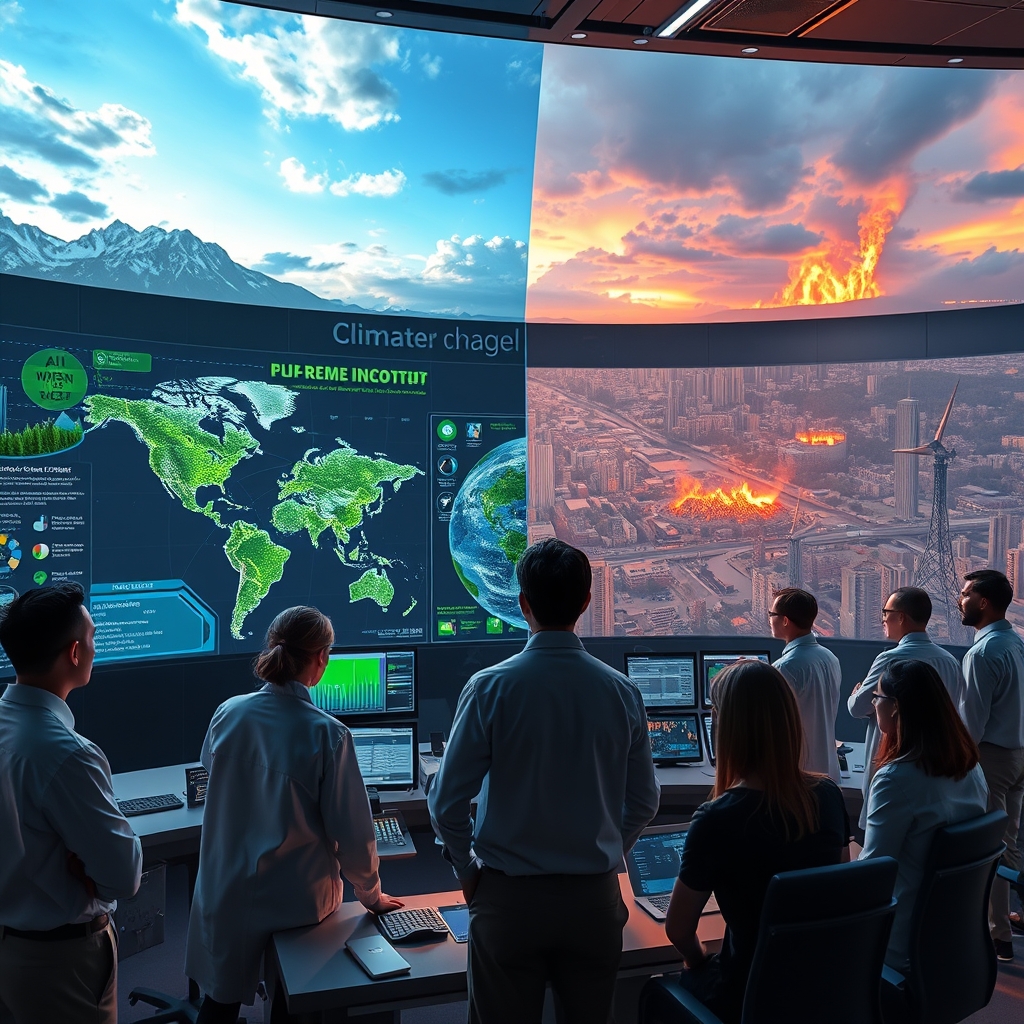
Climate change stands as one of the most pressing challenges of our time, demanding innovative solutions to mitigate its impacts and adapt to a rapidly changing world. Artificial Intelligence (AI) is emerging as a powerful ally in this fight, offering unprecedented capabilities to analyze vast datasets, predict environmental shifts, and optimize resource management. From forecasting extreme weather events to enhancing carbon capture technologies, AI innovations are reshaping climate science and providing actionable insights for policymakers, scientists, and communities alike.
The Power of AI in Climate Modeling
Traditional climate models rely on complex simulations that require immense computational power and time. AI, particularly machine learning (ML), is transforming this process by accelerating data analysis and improving the accuracy of predictions. Neural networks can process satellite imagery, ocean temperature records, and atmospheric data to identify patterns that might elude human researchers. For instance, AI-driven models have been used to predict the intensity and trajectory of hurricanes with greater precision, enabling earlier evacuations and better disaster preparedness.
One notable example is Google’s AI-powered flood forecasting system, which leverages ML to provide real-time alerts to communities in flood-prone regions. By analyzing historical data and current weather conditions, the system can predict flooding events up to seven days in advance, saving lives and reducing economic losses. Such innovations demonstrate how AI can bridge the gap between raw data and actionable intelligence, making climate science more responsive and adaptive.
Enhancing Renewable Energy Efficiency
The transition to renewable energy is critical for reducing greenhouse gas emissions, but integrating sources like solar and wind into existing power grids presents challenges. AI is playing a pivotal role in optimizing renewable energy systems by predicting energy demand, managing grid stability, and maximizing output. For example, AI algorithms can analyze weather patterns to forecast solar and wind energy production, allowing grid operators to balance supply and demand more effectively.
Companies like DeepMind have partnered with wind farms to use AI to predict wind power output up to 36 hours in advance. By adjusting the angle of turbine blades in real-time, these systems can increase energy generation by up to 20%. Similarly, AI-driven smart grids can detect inefficiencies in energy distribution and reroute power to minimize waste. These advancements not only reduce reliance on fossil fuels but also make renewable energy more reliable and cost-effective.
AI for Carbon Capture and Sequestration
Reducing carbon dioxide (CO2) emissions is essential for slowing global warming, but capturing and storing CO2 from the atmosphere remains a complex and energy-intensive process. AI is accelerating the development of carbon capture and sequestration (CCS) technologies by optimizing the design of capture systems and identifying the most effective storage sites. Machine learning models can simulate the behavior of CO2 in underground reservoirs, ensuring that it remains securely stored for centuries.
Researchers at the University of California, Berkeley, have developed an AI system that identifies optimal locations for carbon storage by analyzing geological data. The system can predict the long-term stability of storage sites, reducing the risk of leaks and environmental harm. Additionally, AI is being used to improve direct air capture (DAC) technologies, which extract CO2 directly from the atmosphere. By fine-tuning the chemical processes involved, AI can make DAC more efficient and scalable, bringing us closer to a carbon-neutral future.
Protecting Biodiversity with AI
Climate change is driving unprecedented biodiversity loss, threatening ecosystems and the services they provide. AI is helping conservationists monitor and protect endangered species by analyzing data from camera traps, drones, and satellite imagery. For example, AI-powered image recognition can identify individual animals, track their movements, and detect poaching activities in real-time. This technology enables faster responses to threats and more effective conservation strategies.
The nonprofit organization WildMe uses AI to catalog and track wildlife populations, creating a global database of species like whales, sharks, and cheetahs. By automating the identification process, researchers can spend less time on manual data entry and more time on conservation efforts. AI is also being used to predict the impact of climate change on habitats, allowing scientists to prioritize areas for protection and restoration.
The Role of AI in Climate Policy and Advocacy
Beyond scientific research, AI is empowering policymakers and advocates to make data-driven decisions. Natural language processing (NLP) tools can analyze climate policies, international agreements, and public sentiment to identify gaps and opportunities for action. For instance, AI can assess the effectiveness of carbon pricing mechanisms or simulate the outcomes of different climate scenarios, helping governments design more effective strategies.
Nonprofit organizations like Climate TRACE use AI to track global greenhouse gas emissions in real-time, providing transparency and accountability for industries and nations. By combining satellite data, AI models, and public records, the initiative can pinpoint the sources of emissions with unprecedented accuracy. This information is invaluable for holding polluters accountable and guiding policy interventions.
As AI continues to evolve, its potential to address climate change grows ever more promising. From predicting extreme weather events to optimizing renewable energy systems and protecting biodiversity, AI innovations are equipping humanity with the tools needed to confront this global crisis. The synergy between technology and environmental science is not just a beacon of hope but a testament to what can be achieved when innovation is harnessed for the greater good. The journey toward a sustainable future is complex, but with AI as a guiding force, we are better prepared to navigate the challenges ahead and create a world where both people and the planet can thrive.
You may also like
-
AI Innovations in Disaster Response: Saving Lives with Predictive Intelligence and Real-Time Solutions
-
AI Innovations in Mental Health: Bridging Gaps with Compassionate Technology
-
AI Innovations in Agriculture: Cultivating the Future of Food Security
-
AI Innovations in Personalized Education: Tailoring Learning for the Digital Age
-
AI Innovations in Space Exploration: Pioneering the Cosmos with Intelligent Machines