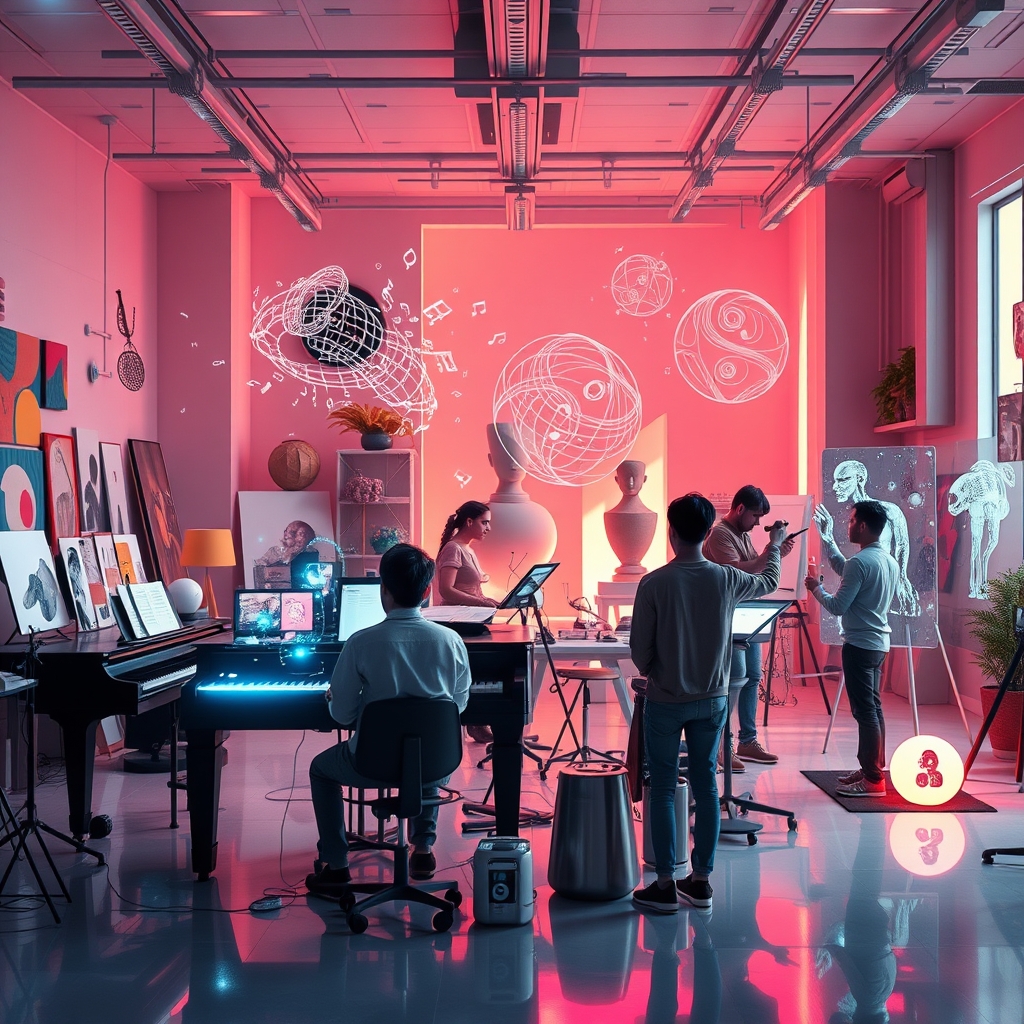
Artificial intelligence has long been associated with data analysis, automation, and problem-solving in technical fields. Yet, one of its most fascinating and rapidly evolving applications lies in the realm of creativity. From generating original music compositions to designing intricate visual art, AI is not just assisting human creators—it is redefining the boundaries of what is possible in art and design. This transformation is not about replacing human ingenuity but expanding its potential, fostering collaboration between human intuition and machine precision.
The Rise of AI-Generated Art
In recent years, AI-generated art has moved from experimental projects to mainstream recognition. Tools like DALL·E, MidJourney, and Stable Diffusion have democratized the creation of visual art, allowing users to generate stunning images from simple text prompts. These systems leverage deep learning models trained on vast datasets of artwork, enabling them to produce pieces that range from hyper-realistic portraits to surreal, dreamlike landscapes. The results are often indistinguishable from human-created art, raising profound questions about authorship, originality, and the nature of creativity itself.
One of the most notable examples of AI’s impact on art was the sale of “Portrait of Edmond de Belamy,” an AI-generated artwork created by the Paris-based collective Obvious. The piece sold at Christie’s auction house for $432,500, far exceeding its estimated value. This milestone marked a turning point, signaling that AI-generated art had not only arrived but was also being embraced by the traditional art world. Galleries and museums are now showcasing AI-created works, and artists are increasingly integrating these tools into their creative processes.
AI in Music: Composing the Future
The music industry is experiencing a similar revolution. AI-powered tools like AIVA, Amper Music, and Google’s Magenta are enabling musicians to compose original scores, generate melodies, and even produce entire albums. These systems analyze vast libraries of music to identify patterns, styles, and structures, allowing them to create compositions that evoke the emotional depth of human-made music. Some AI-generated tracks have even topped charts, blurring the line between human and machine creativity.
For instance, the AI-composed album “I AM AI” by Taryn Southern was entirely produced using AI tools. Southern collaborated with platforms like Amper Music to create a sound that was both innovative and emotionally resonant. Similarly, AI has been used to complete unfinished works by legendary composers, such as Beethoven’s 10th Symphony, which was completed by a team of musicologists and AI researchers. These projects demonstrate how AI can serve as a bridge between the past and the future, preserving artistic legacies while pushing creative boundaries.
Design and Architecture: AI as a Collaborative Partner
In design and architecture, AI is acting as a powerful collaborative partner, enhancing human creativity rather than replacing it. Tools like Autodesk’s Generative Design software allow architects and engineers to input design goals and constraints, after which the AI generates multiple optimized solutions. This process not only accelerates the design phase but also uncovers innovative approaches that might not have been considered otherwise.
For example, the architectural firm Zaha Hadid Architects has used AI to explore complex geometries and structural possibilities in their designs. By leveraging machine learning, they can simulate thousands of design variations in a fraction of the time it would take manually. This approach has led to groundbreaking structures that blend aesthetic beauty with functional efficiency, such as the Morpheus Hotel in Macau, which features a fluid, lattice-like exoskeleton designed with the help of AI.
The Ethical and Philosophical Implications
As AI continues to make inroads into creative industries, it raises important ethical and philosophical questions. Who owns the rights to AI-generated art? Can a machine truly be creative, or is it merely replicating patterns from existing works? These questions challenge our understanding of creativity, originality, and the role of the artist. Some argue that AI-generated art lacks the intentionality and emotional depth of human-created work, while others see it as a new form of expression that complements human creativity.
Legal frameworks are still catching up with these advancements. In 2023, the U.S. Copyright Office ruled that AI-generated art cannot be copyrighted, as it lacks human authorship. This decision has sparked debates about the future of intellectual property in the age of AI, with some advocating for new laws that recognize the collaborative nature of human-AI creativity. Meanwhile, artists and designers are navigating these challenges by developing hybrid workflows that combine AI tools with their unique perspectives and skills.
The Future of AI in Creative Industries
The integration of AI into creative industries is still in its early stages, but its potential is vast. As AI models become more sophisticated, they will likely move beyond generating art and music to actively collaborating with humans in real-time. Imagine a future where musicians jam with AI systems that adapt to their playing style, or where writers co-create stories with AI that suggests plot twists and character developments. These possibilities are not far-fetched—they are the next logical steps in the evolution of human-AI collaboration.
Moreover, AI is making creativity more accessible. Tools like Canva’s AI-powered design features or Adobe’s Sensei are empowering non-professionals to create high-quality visuals, music, and videos with minimal effort. This democratization of creativity has the potential to unlock new voices and perspectives, fostering a more inclusive and diverse creative landscape. However, it also raises concerns about the devaluation of human skill and craftsmanship, as AI-generated content becomes more prevalent.
The relationship between AI and creativity is a dynamic and evolving one, filled with both promise and challenges. As machines continue to push the boundaries of what is possible in art, music, and design, they invite us to rethink our definitions of creativity and innovation. Rather than viewing AI as a threat to human expression, we can see it as a tool that amplifies our potential, enabling us to explore new frontiers of imagination. The future of creativity may not be a battle between man and machine, but a harmonious collaboration where each brings unique strengths to the table, resulting in works that are greater than the sum of their parts.
You may also like
-
AI Innovations in Disaster Response: Saving Lives with Predictive Intelligence and Real-Time Solutions
-
AI Innovations in Mental Health: Bridging Gaps with Compassionate Technology
-
AI Innovations in Agriculture: Cultivating the Future of Food Security
-
AI Innovations in Personalized Education: Tailoring Learning for the Digital Age
-
AI Innovations in Climate Science: Predicting and Combating Global Challenges