
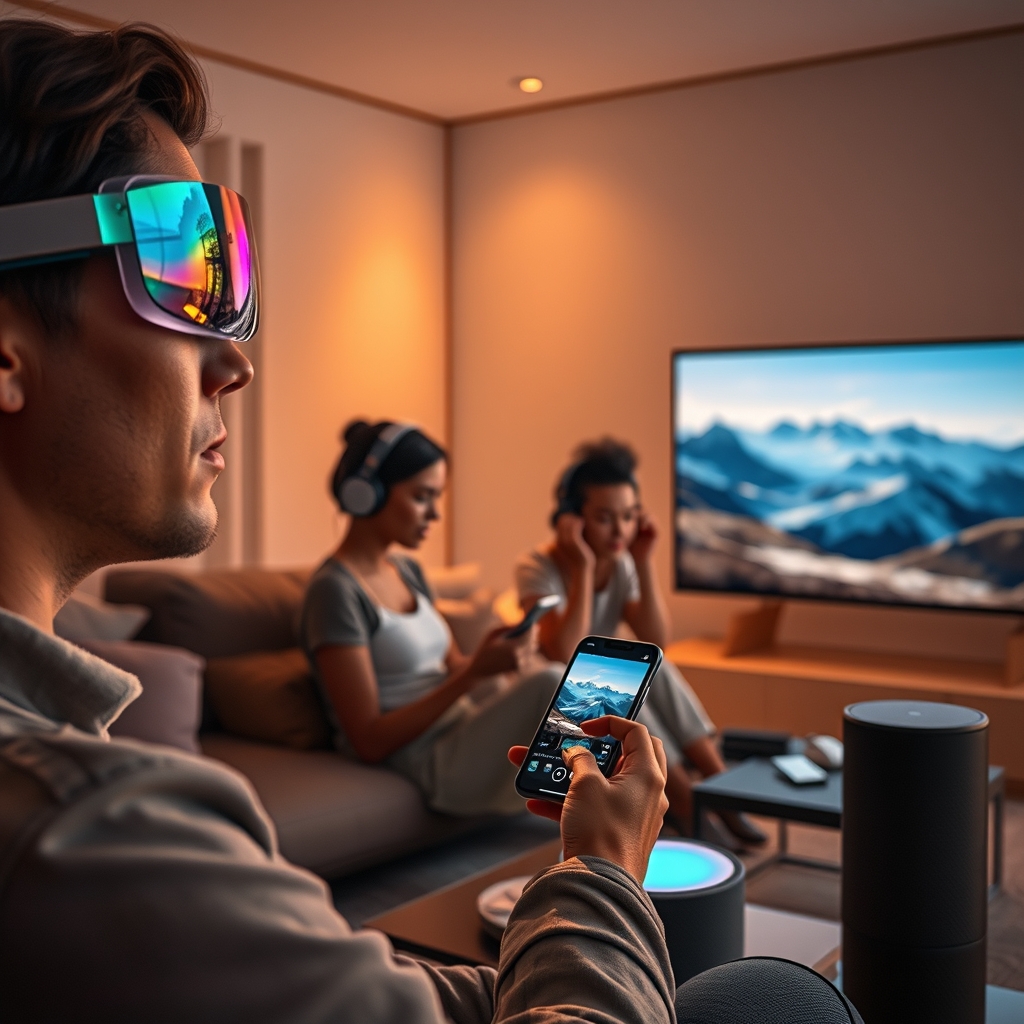
Imagine waking up to the soft hum of a device that not only adjusts the lighting in your room to mimic the sunrise but also brews your coffee to perfection, all while playing your favorite morning playlist at just the right volume. This isn’t a scene from a sci-fi movie—it’s the reality crafted by the latest generation of gadgets that are seamlessly integrating into our lives, enhancing our senses in ways we never thought possible. These aren’t just tools; they’re extensions of our very being, designed to amplify our experiences and redefine what it means to live in the modern world.
The Symphony of Sound: Gadgets That Redefine Audio
Close your eyes and listen. The world around you is a symphony of sounds—some harmonious, some jarring, but all part of the tapestry of life. Now, imagine if you could control that symphony, fine-tuning it to your exact preferences. That’s the promise of the latest audio gadgets, which are doing far more than just playing music. They’re transforming how we perceive sound itself.
Take, for instance, the newest noise-canceling headphones. These aren’t just about blocking out the world; they’re about curating it. With adaptive transparency modes, they allow you to let in the sounds you want—like a colleague’s voice during a meeting—while filtering out the ones you don’t, such as the relentless hum of an airplane engine. It’s like having a sound engineer in your ear, adjusting the mix in real-time to create the perfect auditory experience. And it’s not just about isolation; it’s about connection. Some of these devices can even enhance speech clarity, making conversations in noisy environments feel as intimate as a whisper in a quiet room.
But the revolution doesn’t stop at headphones. Smart speakers and soundbars are now equipped with spatial audio technology, turning your living room into a concert hall or a movie theater. These gadgets use advanced algorithms to create a three-dimensional soundscape, where the audio doesn’t just come from one direction—it envelops you. It’s the difference between watching a movie and being in the movie. The roar of a spaceship engine doesn’t just come from the screen; it feels like it’s whizzing past your ears, pulling you deeper into the story.
The Touch of Tomorrow: Haptic Feedback and Beyond
Our sense of touch is one of the most primal and intimate ways we interact with the world. Yet, for all its importance, it’s often the most overlooked in the realm of gadgets. That’s changing. The latest innovations in haptic feedback are bringing a new dimension to how we experience technology, making digital interactions feel as real as the physical world.
Consider the latest smartphones and gaming controllers. They don’t just vibrate; they communicate. Advanced haptic engines can simulate the texture of different surfaces, the resistance of a button press, or even the sensation of raindrops falling on your hand. It’s a level of immersion that goes beyond what we’ve ever experienced before. Imagine playing a game where you can feel the tension of a bowstring as you draw it back or the recoil of a gun as you fire. These aren’t just vibrations; they’re emotions translated into tactile feedback.
But haptics aren’t just for entertainment. They’re also making technology more accessible. For individuals with visual impairments, haptic feedback can provide a new way to navigate the digital world. A simple tap or vibration can convey information that would otherwise require sight, opening up possibilities for communication and interaction that were previously out of reach. It’s a reminder that the best gadgets aren’t just about flashy features—they’re about making life richer and more inclusive for everyone.
The Eyes Have It: Gadgets That Enhance Vision
Our eyes are our windows to the world, but what if those windows could do more than just see? What if they could enhance, augment, and even transform our visual experiences? The latest gadgets are doing just that, pushing the boundaries of what our eyes can perceive and how we interact with the world around us.
Augmented reality (AR) glasses are at the forefront of this revolution. These sleek, lightweight devices overlay digital information onto the real world, turning everyday scenes into interactive experiences. Imagine walking down the street and seeing real-time translations of foreign signs, or looking at a landmark and instantly accessing its history. AR glasses aren’t just about adding information; they’re about enriching our understanding of the world in real-time.
But it’s not just about AR. The latest cameras and displays are also redefining how we capture and consume visual content. Smartphone cameras, for instance, are now equipped with computational photography features that can adjust lighting, focus, and even remove unwanted objects from photos with a single tap. It’s like having a professional photographer in your pocket, ready to capture the perfect shot every time. And when it comes to displays, the latest OLED and MicroLED screens offer levels of brightness, contrast, and color accuracy that make images look almost lifelike. Whether you’re watching a movie or editing a photo, these screens make the digital world feel as vivid as the real one.
The Invisible Thread: How Gadgets Connect Us
At their core, gadgets are about more than just technology—they’re about connection. They bridge the gap between the digital and physical worlds, bringing us closer to the people, places, and experiences that matter most. The latest gadgets are taking this connection to new heights, weaving an invisible thread that binds us together in ways we’re only beginning to understand.
Take, for example, the rise of wearable tech. Devices like smartwatches and fitness trackers don’t just monitor our health; they keep us connected to the people we care about. A simple tap on your wrist can send a message, share your location, or even let someone know you’re thinking of them. It’s a small gesture, but one that can make a big difference in how we stay in touch with the ones we love. And with features like fall detection and emergency SOS, these gadgets are also providing a sense of security, knowing that help is always just a button press away.
But perhaps the most exciting aspect of this connection is how gadgets are fostering new forms of creativity and collaboration. Tools like digital styluses and touchscreen tablets are empowering artists to create in ways that were once unimaginable. Musicians can compose symphonies on their smartphones, and designers can sketch out their visions with the precision of a traditional pencil. These gadgets aren’t just tools; they’re catalysts for innovation, enabling us to express ourselves in ways we never thought possible.
As we stand on the brink of this new era of gadgets, it’s clear that the line between technology and humanity is blurring. These devices aren’t just changing how we interact with the world—they’re changing how we experience it. They’re enhancing our senses, deepening our connections, and opening up possibilities that were once the stuff of dreams. And the best part? We’re only just getting started. The next wave of innovations is already on the horizon, promising to take us even further into a future where technology and humanity exist in perfect harmony, each elevating the other to new heights.
You may also like
-
The Electric Pulse of Modern Life: Gadgets That Don’t Just Keep Up—They Anticipate
-
The Uncharted Frontier: How Wearable Tech is Mapping the Future of Human Experience
-
The Symphony of Speed: How Next-Gen Gadgets Are Composing the Future of Performance
-
The Alchemy of Touch: How Haptic Feedback Gadgets Are Rewriting the Language of Interaction
-
The Unspoken Elegance: How Minimalist Gadgets Are Redefining Modern Sophistication