
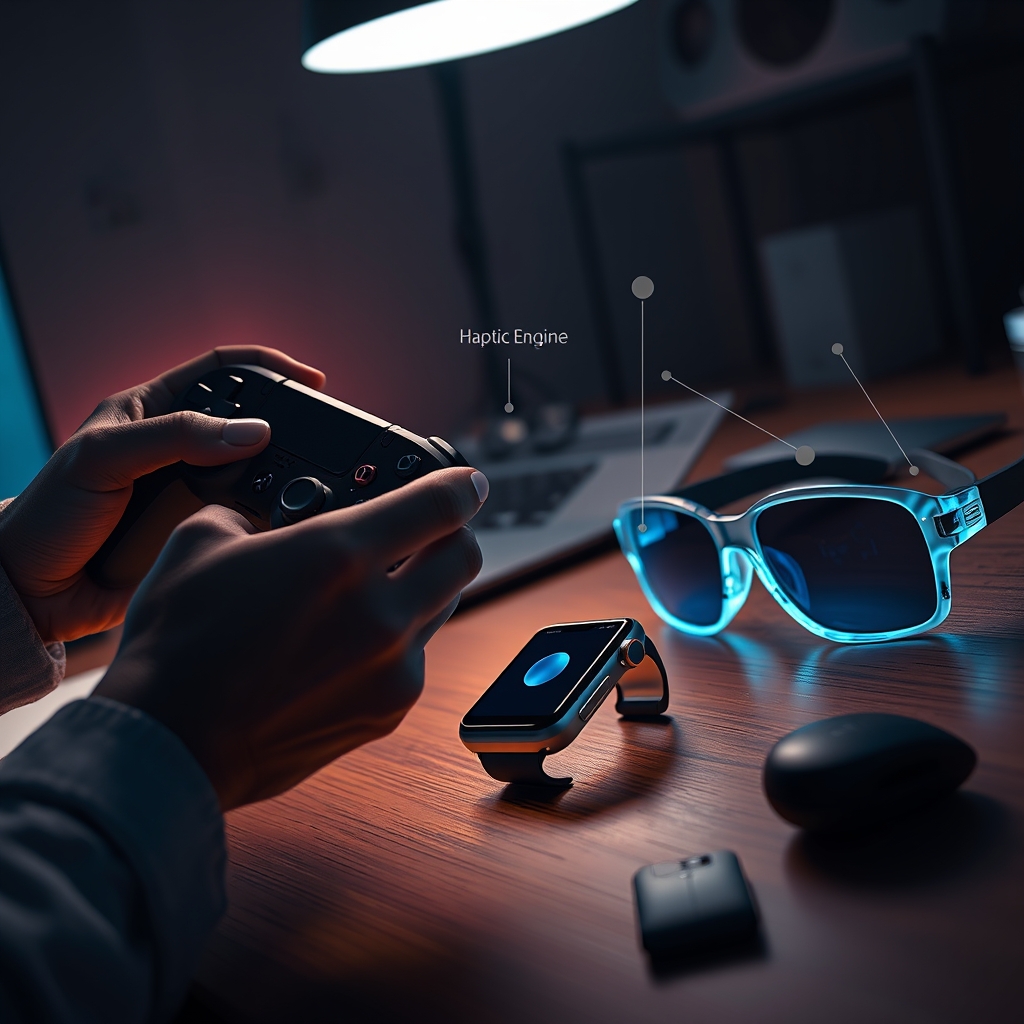
There’s a quiet revolution humming beneath the surface of our digital lives, one that doesn’t rely on flashy screens or thunderous speakers to make its presence known. It’s the subtle, almost magical language of touch—haptic feedback—that’s transforming the way we interact with technology. No longer confined to the buzz of a smartphone notification or the click of a mechanical keyboard, haptics have evolved into a nuanced, almost poetic form of communication between human and machine. And the gadgets leading this charge? They’re not just tools; they’re storytellers, translating the intangible into something deeply, undeniably real.
The Silent Symphony of Sensation
Imagine holding a controller that doesn’t just vibrate but feels. The difference is profound. Traditional rumble packs in gaming controllers were a blunt instrument—a one-note sledgehammer compared to the symphony of sensations modern haptic engines can produce. Take the PlayStation 5’s DualSense controller, for instance. It doesn’t just tell you when you’re firing a gun; it lets you feel the tension of the bowstring in Horizon Forbidden West, the resistance of a virtual trigger, or the crunch of snow beneath your character’s boots. It’s a level of immersion that transcends the visual, pulling you into the game’s world with a tactile intimacy that feels almost sacred.
But haptics aren’t just for gamers. They’re seeping into every corner of our digital existence, from the Apple Watch’s Taptic Engine, which delivers a gentle tap to nudge you toward a standing break, to the Tesla Model S’s haptic touchscreen, where every button press is met with a satisfying, almost physical click—despite the absence of actual buttons. These gadgets aren’t just responding to our commands; they’re speaking to us in a language that bypasses the brain and resonates directly with the body.
The Art of Subtlety: When Less Becomes More
What makes haptic feedback so mesmerizing is its ability to convey meaning without overwhelming the senses. A well-designed haptic signal can be as subtle as a whisper or as urgent as a shout, all without making a sound. Consider the Bose Frames Tempo, a pair of sunglasses that use bone conduction and haptic feedback to guide runners through city streets. Instead of relying on audio cues that might drown out the ambient sounds of the world, the glasses deliver a series of gentle pulses to your temples—left for a left turn, right for a right. It’s navigation stripped down to its purest form: a silent conversation between you and the path ahead.
Or take the Lofelt L5, a haptic feedback platform that’s being integrated into everything from car seats to VR gloves. Its technology doesn’t just vibrate; it shapes the sensation, creating patterns that mimic the texture of rain, the recoil of a gun, or the heartbeat of a virtual character. It’s a reminder that touch isn’t just a sense—it’s a canvas, and haptics are the brushstrokes that bring it to life.
The Emotional Resonance of Touch
There’s something deeply human about the way haptics connect with us on an emotional level. A study from the University of California found that people who received a gentle touch during a stressful moment experienced a significant drop in cortisol levels—the hormone associated with stress. It’s no wonder, then, that gadgets leveraging haptic feedback can evoke such a visceral response. The Ember Smart Mug, for example, doesn’t just keep your coffee warm; it pulses gently when your drink reaches the perfect temperature, creating a moment of anticipation and delight that’s as much about emotion as it is about function.
Even in the realm of accessibility, haptics are breaking barriers. Devices like the BuzzClip, a wearable for the visually impaired, use vibrations to alert users to obstacles in their path. It’s a simple concept, but one that transforms the way people navigate the world—turning the invisible into something tangible, something felt.
The Future: A World Where Technology Feels
As haptic technology continues to evolve, the line between the digital and physical worlds grows increasingly blurred. We’re moving toward a future where your smartphone doesn’t just show you a message—it taps you to let you know it’s there. Where your VR headset doesn’t just show you a virtual object—it lets you touch it, feel its weight, its texture, its presence. Companies like Teslasuit are already pushing the boundaries with full-body haptic suits that simulate everything from the impact of a virtual punch to the warmth of a digital sun.
But perhaps the most exciting frontier is the one we’re only beginning to explore: the emotional potential of haptics. Imagine a world where a loved one’s voice message isn’t just heard but felt, where the warmth of their touch is transmitted through a haptic glove. Or where a therapist’s guidance isn’t just spoken but experienced through a wearable that gently guides your breathing during a panic attack. These aren’t just gadgets; they’re extensions of human connection, tools that don’t just augment our senses but deepen our capacity for empathy.
The gadgets of tomorrow won’t just be seen or heard—they’ll be felt. And in that subtle shift, we’ll find a new way to experience the world, one where technology doesn’t just speak to us but touches us, in every sense of the word. The alchemy of haptics isn’t just changing how we interact with machines; it’s rewriting the very language of human experience, one vibration at a time.
You may also like
-
The Electric Pulse of Modern Life: Gadgets That Don’t Just Keep Up—They Anticipate
-
The Uncharted Frontier: How Wearable Tech is Mapping the Future of Human Experience
-
The Symphony of Speed: How Next-Gen Gadgets Are Composing the Future of Performance
-
The Unspoken Elegance: How Minimalist Gadgets Are Redefining Modern Sophistication
-
The Soul of Silicon: How the Latest Gadgets Are Breathing Life into Our Digital Existence