
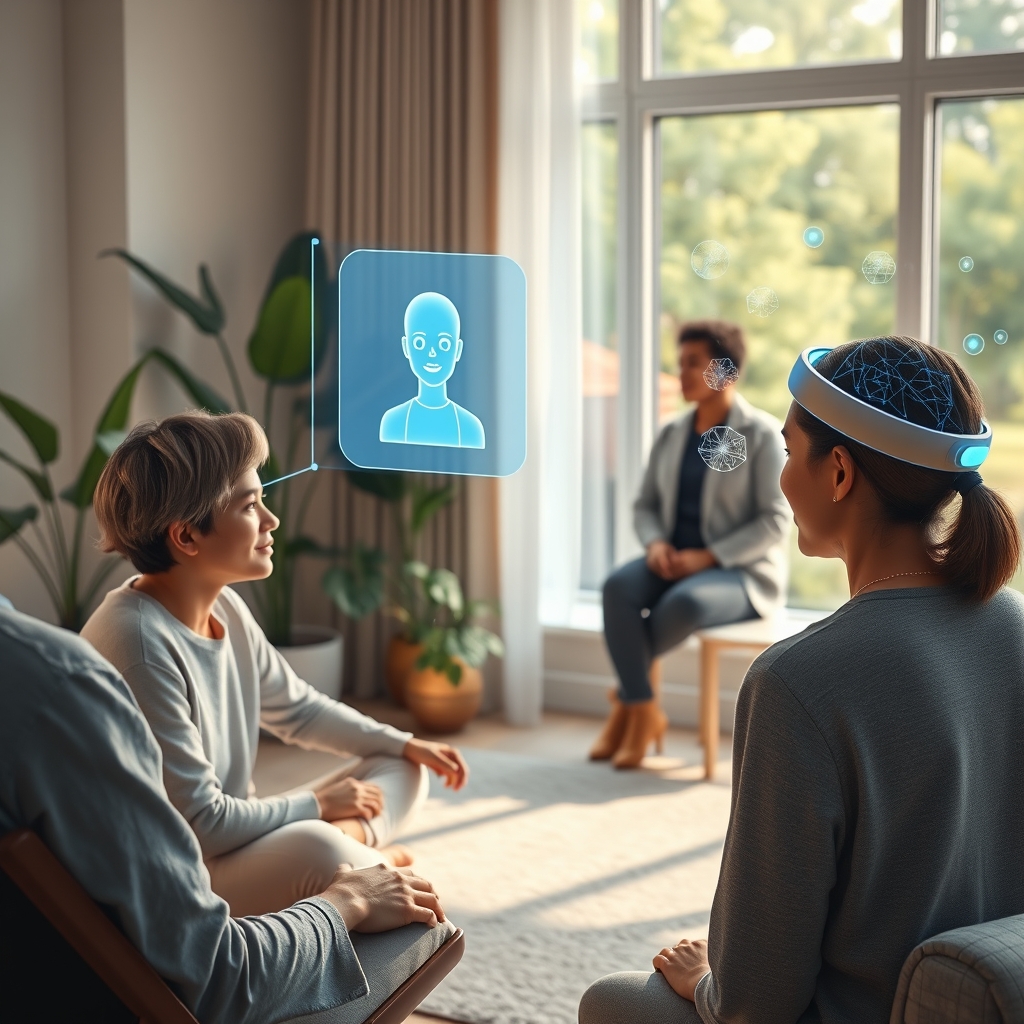
Mental health has long been a critical yet under-resourced area of healthcare, with millions of people worldwide struggling to access timely and effective support. The stigma surrounding mental health issues, coupled with a shortage of trained professionals, has created a global gap in care. However, artificial intelligence is emerging as a transformative force in this space, offering innovative solutions that enhance accessibility, personalization, and early intervention. From chatbots that provide immediate emotional support to predictive algorithms that identify at-risk individuals, AI is redefining how we approach mental well-being in the 21st century.
The Rise of AI-Powered Mental Health Assistants
One of the most visible applications of AI in mental health is the development of conversational agents, or chatbots, designed to provide emotional support and therapeutic interventions. These AI-driven tools, such as Woebot, Replika, and Wysa, leverage natural language processing (NLP) to engage users in meaningful conversations, offering coping strategies, cognitive behavioral therapy (CBT) techniques, and even crisis intervention. Unlike traditional therapy, these chatbots are available 24/7, removing barriers like cost, wait times, and geographic limitations.
Research has shown that these AI assistants can be remarkably effective, particularly for individuals who may feel uncomfortable discussing their struggles with a human therapist. A study published in the Journal of Medical Internet Research found that Woebot significantly reduced symptoms of depression and anxiety in users over a two-week period. While these tools are not a replacement for professional care, they serve as a valuable first line of support, especially in regions where mental health services are scarce.
Predictive Analytics: Identifying Risk Before It Escalates
AI’s ability to analyze vast amounts of data is proving invaluable in identifying individuals at risk of mental health crises before they occur. Machine learning models trained on electronic health records, social media activity, and even wearable device data can detect patterns indicative of depression, anxiety, or suicidal ideation. For example, researchers at Vanderbilt University developed an AI algorithm that predicts suicide risk with 80-90% accuracy by analyzing patient records, including past diagnoses, medication history, and hospital visits.
Social media platforms are also harnessing AI to monitor for signs of distress. Facebook, for instance, uses AI to scan posts and comments for language that may suggest self-harm or suicidal thoughts, prompting the platform to connect users with crisis resources or alert emergency services. While privacy concerns remain a critical consideration, the potential to save lives through early intervention is undeniable.
Personalized Therapy: Tailoring Treatment to the Individual
Mental health is deeply personal, and what works for one individual may not work for another. AI is enabling a shift toward personalized therapy by analyzing a patient’s unique history, symptoms, and responses to treatment. For example, AI-powered platforms like Ginger and SilverCloud use data from user interactions to adapt therapeutic approaches in real time, ensuring that interventions remain relevant and effective.
In clinical settings, AI is assisting therapists by providing insights into a patient’s progress. Tools like IBM Watson Health analyze therapy session transcripts to identify trends, highlight areas of concern, and suggest evidence-based strategies. This not only enhances the quality of care but also allows therapists to focus more on building rapport with their patients, rather than getting bogged down in administrative tasks.
Overcoming Barriers: Accessibility and Affordability
One of the most significant advantages of AI in mental health is its potential to democratize access to care. In many parts of the world, mental health services are either unavailable or prohibitively expensive. AI-driven solutions, such as mobile apps and online platforms, provide low-cost or free alternatives that can reach underserved populations. For example, the app Sanvello offers guided meditation, mood tracking, and CBT exercises at a fraction of the cost of traditional therapy.
Moreover, AI is breaking down language barriers by offering multilingual support. Chatbots and virtual therapists can communicate in multiple languages, making mental health resources accessible to non-English speakers who might otherwise struggle to find help. This is particularly impactful in multicultural societies and developing countries, where language can be a significant obstacle to care.
The Ethical Considerations of AI in Mental Health
While the benefits of AI in mental health are substantial, they are not without ethical challenges. Privacy is a primary concern, as AI systems often rely on sensitive personal data to function effectively. Ensuring that this data is securely stored and used responsibly is paramount to maintaining user trust. Additionally, there is the risk of over-reliance on AI, where individuals may prioritize digital interactions over human connections, potentially exacerbating feelings of isolation.
Another critical issue is the potential for bias in AI algorithms. If the data used to train these systems is not diverse, the resulting models may not perform equally well across different demographics. For example, an AI tool trained primarily on data from Western populations might not accurately assess mental health risks in other cultural contexts. Addressing these biases requires intentional efforts to include diverse datasets and ongoing monitoring of AI performance.
The Future of AI and Mental Health
As AI technology continues to evolve, its applications in mental health are likely to become even more sophisticated. Emerging trends include the integration of AI with virtual reality (VR) to create immersive therapeutic environments, as well as the use of brain-computer interfaces (BCIs) to monitor and regulate emotional states in real time. These innovations could revolutionize treatment for conditions like PTSD, where exposure therapy in a controlled VR environment has already shown promise.
Collaboration between AI developers, mental health professionals, and policymakers will be essential to ensure that these technologies are deployed ethically and effectively. By prioritizing transparency, inclusivity, and user well-being, AI can play a pivotal role in creating a future where mental health care is accessible, personalized, and compassionate for all.
The intersection of AI and mental health is more than just a technological advancement—it is a lifeline for millions of people who have long been overlooked by traditional healthcare systems. As these innovations continue to unfold, they offer a glimmer of hope for a world where no one has to face their struggles alone, and where support is always within reach, no matter who you are or where you live.
You may also like
-
AI Innovations in Disaster Response: Saving Lives with Predictive Intelligence and Real-Time Solutions
-
AI Innovations in Agriculture: Cultivating the Future of Food Security
-
AI Innovations in Personalized Education: Tailoring Learning for the Digital Age
-
AI Innovations in Climate Science: Predicting and Combating Global Challenges
-
AI Innovations in Space Exploration: Pioneering the Cosmos with Intelligent Machines