
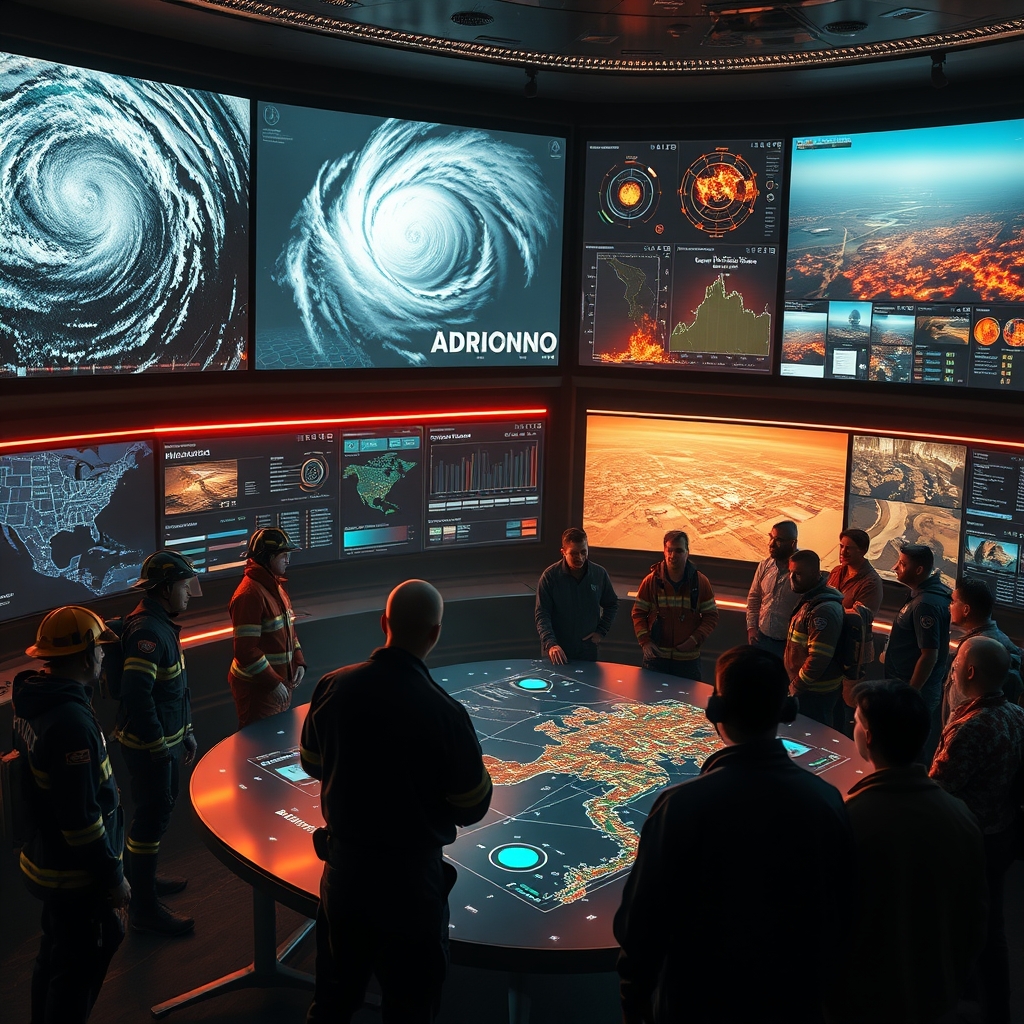
In an era where climate change is intensifying the frequency and severity of natural disasters, the role of artificial intelligence in disaster response has become more critical than ever. From predicting hurricanes with unprecedented accuracy to coordinating rescue efforts in real-time, AI innovations are transforming how communities prepare for, respond to, and recover from catastrophic events. These advancements are not just about technology—they are about saving lives, minimizing damage, and ensuring resilience in the face of adversity.
The Power of Predictive AI: Forecasting Disasters Before They Strike
One of the most groundbreaking applications of AI in disaster response lies in its predictive capabilities. Traditional forecasting models rely on historical data and static algorithms, but AI-driven systems leverage machine learning to analyze vast datasets in real-time, identifying patterns that human analysts might miss. For instance, AI models trained on satellite imagery, weather patterns, and ocean temperatures can predict hurricanes, wildfires, and floods with greater precision and lead time than ever before.
In 2023, researchers at the University of California developed an AI system capable of predicting wildfire spread with 90% accuracy up to six hours in advance. By processing data from drones, weather stations, and historical fire behavior, the system provides firefighters with actionable insights, allowing them to allocate resources more effectively and evacuate at-risk areas before flames engulf communities. Similarly, AI-powered flood prediction models, such as those developed by Google’s DeepMind, analyze rainfall patterns and river levels to issue early warnings, giving authorities the time they need to implement flood defenses and evacuate vulnerable populations.
Real-Time Decision Making: AI in the Heat of the Moment
When disaster strikes, every second counts. AI innovations are enabling first responders to make faster, more informed decisions by processing real-time data from multiple sources. Drones equipped with AI-powered computer vision can survey disaster zones, identifying survivors trapped under rubble or in flooded areas. These systems can distinguish between debris and human forms, guiding rescue teams to those in need with pinpoint accuracy.
In earthquake-prone regions, AI-driven seismic monitoring networks analyze ground vibrations to detect tremors milliseconds before they escalate into full-blown quakes. Cities like Los Angeles and Tokyo have implemented these systems, which automatically trigger alerts to residents’ smartphones, giving them precious seconds to take cover. Meanwhile, AI-powered chatbots and virtual assistants, such as those deployed by the Red Cross, provide real-time guidance to affected individuals, offering instructions on evacuation routes, first aid, and emergency contacts.
Enhancing Coordination and Resource Allocation
Disaster response often involves multiple agencies, from local fire departments to international aid organizations, all working in tandem to mitigate damage and save lives. AI streamlines this coordination by optimizing resource allocation and logistics. For example, AI algorithms can analyze traffic patterns, road closures, and the locations of emergency shelters to determine the fastest routes for ambulances and supply trucks. During the 2022 floods in Pakistan, AI-driven logistics platforms helped distribute food, water, and medical supplies to millions of displaced people, ensuring that aid reached those who needed it most.
AI also plays a crucial role in post-disaster recovery. Machine learning models assess structural damage to buildings and infrastructure by analyzing aerial imagery and sensor data. This allows governments and relief organizations to prioritize reconstruction efforts and allocate funds where they are most needed. In Puerto Rico, AI was used to evaluate the damage caused by Hurricane Maria, helping to rebuild critical infrastructure like hospitals and power grids more efficiently.
The Human-AI Partnership: Balancing Technology and Compassion
While AI offers unprecedented capabilities in disaster response, it is essential to recognize that technology alone cannot address the human dimensions of crises. The most effective disaster response strategies combine AI’s predictive and analytical power with human empathy and local knowledge. For instance, AI can identify areas at high risk of landslides, but community leaders and volunteers are often best positioned to communicate warnings and organize evacuations in ways that resonate with residents.
Moreover, AI systems must be designed with inclusivity in mind. Disasters disproportionately affect marginalized communities, and AI tools must account for factors like language barriers, disabilities, and socioeconomic disparities. For example, AI-powered translation tools can ensure that emergency alerts are accessible to non-English speakers, while voice-activated assistants can assist individuals with visual impairments in navigating evacuation routes.
The Future of AI in Disaster Response: Challenges and Opportunities
As AI continues to evolve, its potential to revolutionize disaster response grows. Emerging technologies like quantum computing and edge AI—where data is processed locally on devices rather than in the cloud—could further enhance real-time decision-making in remote or connectivity-challenged areas. Additionally, advancements in robotics may soon enable AI-driven drones and robots to perform complex rescue operations, such as extinguishing fires or delivering medical supplies to inaccessible locations.
However, the integration of AI into disaster response is not without challenges. Data privacy concerns, algorithmic bias, and the digital divide must be addressed to ensure that AI tools are equitable and effective. Governments, tech companies, and humanitarian organizations must collaborate to establish ethical guidelines and standards for AI deployment in crisis situations. Transparency in how AI models make decisions is also critical, as it builds trust among the public and ensures that technology serves the greater good.
As we stand on the brink of a new era in disaster response, the fusion of AI and human ingenuity offers a beacon of hope. By harnessing the power of predictive intelligence, real-time data analysis, and compassionate innovation, we can build a future where communities are not just reactive to disasters but resilient in the face of them. The goal is not to replace human effort but to amplify it, ensuring that when the next crisis strikes, we are better prepared, more coordinated, and more capable of protecting those who need it most.
You may also like
-
AI Innovations in Mental Health: Bridging Gaps with Compassionate Technology
-
AI Innovations in Agriculture: Cultivating the Future of Food Security
-
AI Innovations in Personalized Education: Tailoring Learning for the Digital Age
-
AI Innovations in Climate Science: Predicting and Combating Global Challenges
-
AI Innovations in Space Exploration: Pioneering the Cosmos with Intelligent Machines