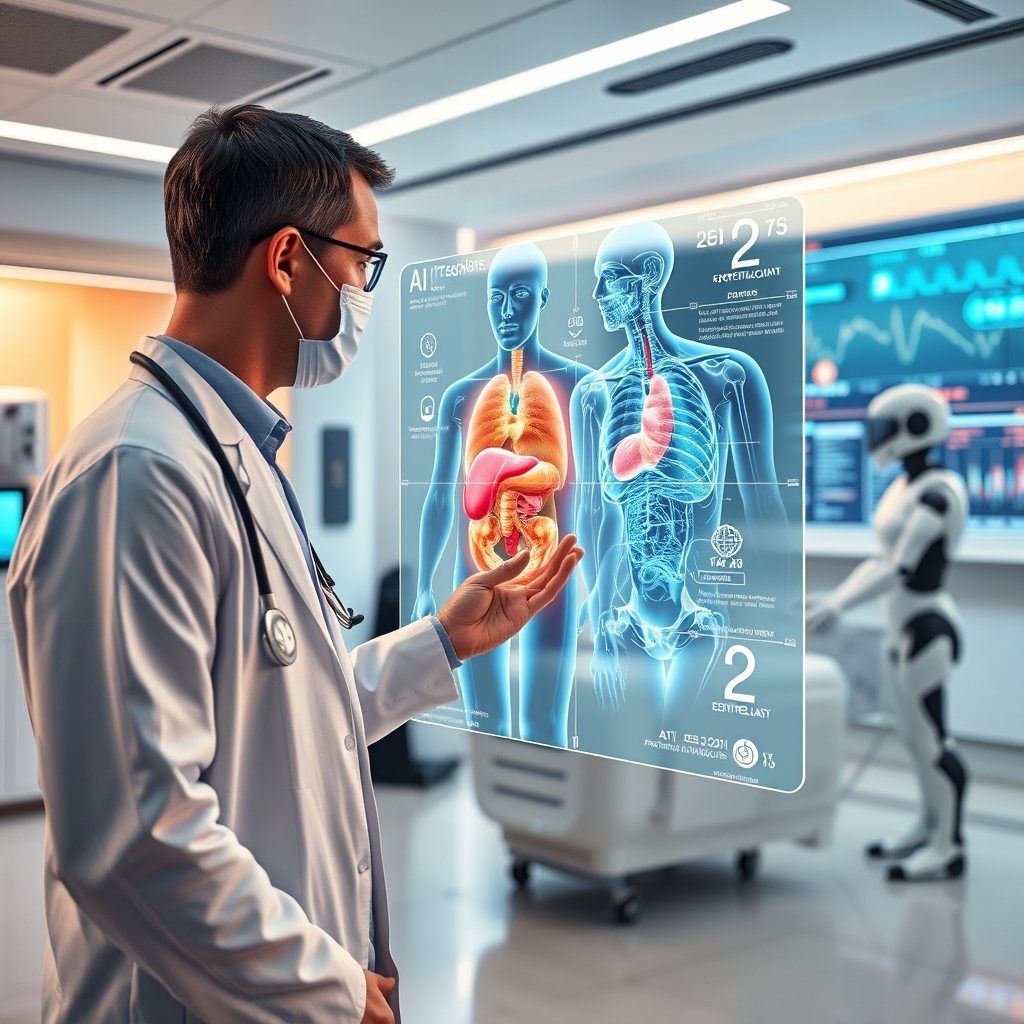
Artificial Intelligence is no longer a concept confined to the realms of science fiction; it is a tangible force driving transformative changes across various industries. Among these, healthcare stands out as a sector where AI innovations are making profound impacts, reshaping the way medical professionals diagnose, treat, and manage patient care. The integration of AI in healthcare is not just enhancing efficiency but also saving lives by providing unprecedented accuracy and personalized treatment options.
The Rise of AI-Powered Diagnostics
One of the most significant contributions of AI in healthcare is its ability to revolutionize diagnostics. Traditional diagnostic methods often rely on the expertise of medical professionals, which, while invaluable, can be limited by human error and variability. AI-powered diagnostic tools, on the other hand, leverage machine learning algorithms to analyze vast amounts of medical data with remarkable precision. For instance, AI systems can interpret radiology images, such as X-rays and MRIs, to detect anomalies like tumors or fractures with a level of accuracy that rivals, and in some cases surpasses, that of human radiologists.
Companies like IBM Watson Health and Google DeepMind have developed AI platforms that can process and analyze medical images in a fraction of the time it takes a human. These systems are trained on thousands of images, enabling them to recognize patterns and subtle indicators that might be overlooked by the human eye. The result is faster, more accurate diagnoses, which can lead to earlier interventions and improved patient outcomes.
Personalized Medicine: Tailoring Treatment with AI
Beyond diagnostics, AI is paving the way for personalized medicine, a approach that tailors treatment plans to the individual characteristics of each patient. By analyzing genetic data, lifestyle factors, and medical history, AI algorithms can predict how a patient will respond to specific treatments, allowing healthcare providers to customize therapies for maximum efficacy. This is particularly impactful in the field of oncology, where AI-driven tools are used to identify the most effective cancer treatments based on a patient’s unique genetic profile.
For example, AI platforms like Tempus and Foundation Medicine use machine learning to analyze clinical and molecular data, helping oncologists determine the best course of action for cancer patients. This not only improves treatment outcomes but also reduces the trial-and-error approach that has long been a challenge in cancer care. Personalized medicine is not just a futuristic concept; it is a reality that is already transforming patient care today.
AI in Predictive Analytics: Anticipating Health Risks
Predictive analytics is another area where AI is making waves in healthcare. By analyzing historical and real-time data, AI systems can identify patterns and predict potential health risks before they become critical. This proactive approach enables healthcare providers to intervene early, preventing complications and reducing hospital readmissions. For instance, AI algorithms can analyze electronic health records (EHRs) to predict which patients are at high risk of developing conditions like sepsis or heart failure, allowing for timely interventions.
Hospitals and healthcare systems are increasingly adopting AI-driven predictive analytics tools to improve patient care. For example, the Mayo Clinic uses AI to predict patient deterioration, while companies like KenSci are developing platforms that help healthcare providers identify at-risk patients and optimize resource allocation. These innovations are not only improving patient outcomes but also reducing healthcare costs by preventing expensive emergency interventions.
The Role of AI in Drug Discovery and Development
The process of drug discovery and development is notoriously time-consuming and expensive, often taking over a decade and costing billions of dollars. AI is poised to revolutionize this process by accelerating the identification of potential drug candidates and streamlining clinical trials. Machine learning algorithms can analyze vast datasets to identify patterns and predict how different compounds will interact with biological targets, significantly reducing the time and cost associated with bringing new drugs to market.
Companies like Atomwise and BenevolentAI are at the forefront of this revolution, using AI to discover new drugs and repurpose existing ones for new therapeutic uses. For example, AI played a crucial role in the rapid development of COVID-19 vaccines by identifying potential vaccine candidates and optimizing clinical trial designs. This demonstrates the immense potential of AI to transform drug discovery and address global health challenges.
Challenges and Ethical Considerations
While the benefits of AI in healthcare are undeniable, the integration of these technologies is not without challenges. Data privacy and security are major concerns, as AI systems rely on vast amounts of sensitive patient data. Ensuring that this data is protected and used ethically is paramount to maintaining patient trust and compliance with regulations like HIPAA and GDPR.
Additionally, there is the issue of bias in AI algorithms. If the data used to train these systems is not representative of diverse populations, the resulting algorithms may produce biased outcomes, leading to disparities in healthcare. Addressing these challenges requires a collaborative effort between technologists, healthcare providers, and policymakers to ensure that AI is deployed responsibly and equitably.
As AI continues to evolve, its role in healthcare will only grow more significant. The innovations we are witnessing today are just the beginning of a broader transformation that promises to make healthcare more precise, personalized, and proactive. By embracing these technologies and addressing the associated challenges, we can unlock the full potential of AI to improve health outcomes and enhance the quality of life for people around the world. The future of healthcare is not just about treating illness; it is about preventing it, predicting it, and personalizing care in ways we once thought impossible.
You may also like
-
AI Innovations in Disaster Response: Saving Lives with Predictive Intelligence and Real-Time Solutions
-
AI Innovations in Mental Health: Bridging Gaps with Compassionate Technology
-
AI Innovations in Agriculture: Cultivating the Future of Food Security
-
AI Innovations in Personalized Education: Tailoring Learning for the Digital Age
-
AI Innovations in Climate Science: Predicting and Combating Global Challenges