
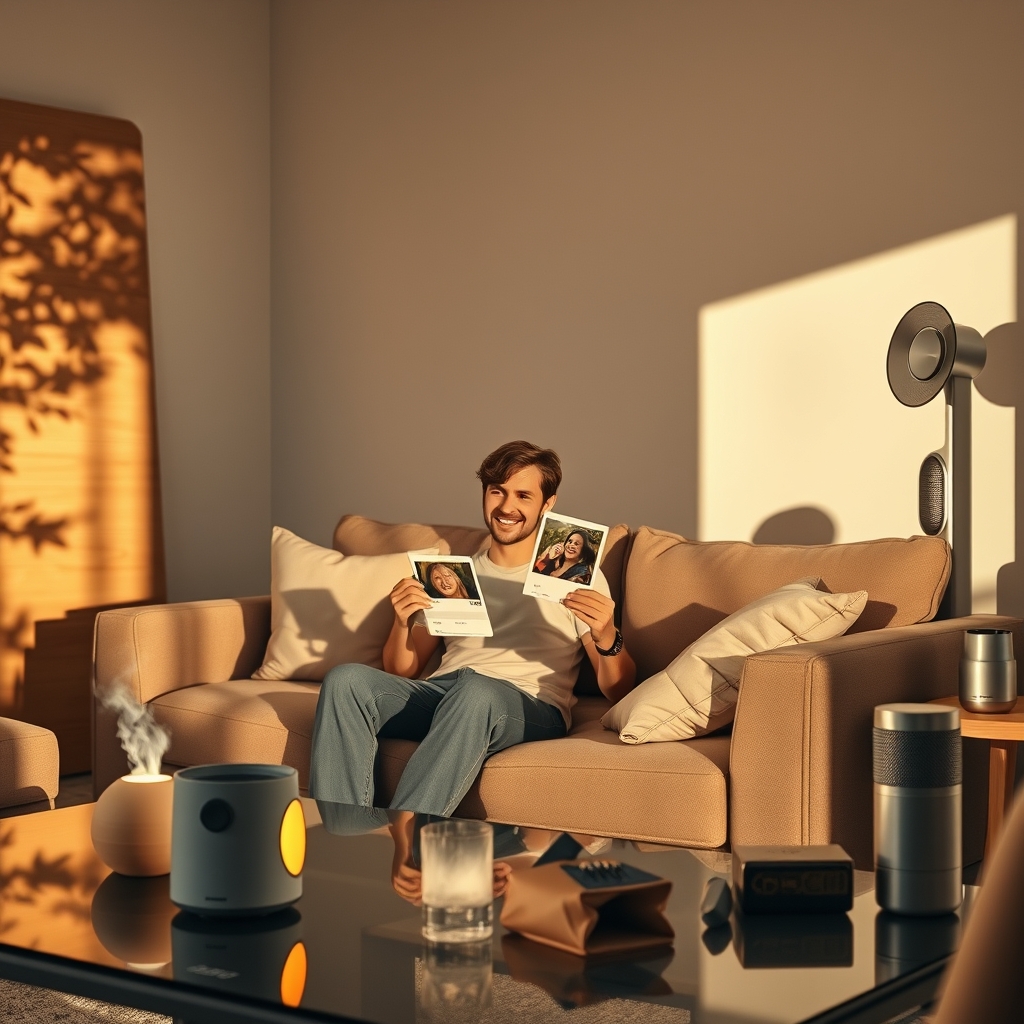
There’s a quiet hum in the air, a pulse so subtle it often goes unnoticed. It’s not the roar of a jet engine or the clatter of a keyboard, but the almost imperceptible whisper of innovation weaving itself into the fabric of our daily lives. Gadgets, once clunky and loud, have evolved into sleek, silent revolutionaries—devices that don’t just perform tasks but anticipate desires, adapt to rhythms, and even learn the cadence of our breath. This is not the future we were promised in sci-fi novels; it’s the present, unfolding in the palm of our hands, on our wrists, and in the corners of our homes where technology fades into the background like a well-rehearsed orchestra.
The Invisible Handshake: When Gadgets Understand You
Imagine waking up to a room that knows you better than you know yourself. The lights adjust not just to the time of day, but to the quality of your sleep—soft amber hues if you tossed and turned, a gentle golden glow if you drifted into a deep, restorative slumber. This is the promise of gadgets like the Philips Hue with Sleep Analysis, a system that doesn’t just illuminate spaces but responds to the nuances of your well-being. It’s not about flashy features or over-the-top automation; it’s about a device that listens, learns, and adapts without demanding your attention.
Or consider the Ember Mug 2, a ceramic vessel that does more than keep your coffee warm. It remembers your preferred temperature, adjusts it based on the time of day, and even syncs with your smartwatch to remind you to take a sip when your hydration levels dip. It’s a gadget that doesn’t just serve; it nurtures. The magic lies in its subtlety—no beeps, no buzzes, just a gentle nudge from the universe saying, *I’ve got you*.
The Art of Disappearing: Gadgets That Blend Into the Background
The most profound innovations are often the ones we forget are there. Take the Nanoleaf Elements, a set of modular wooden panels that double as smart lighting. At first glance, they’re indistinguishable from a piece of modern art—sculptural, organic, and utterly devoid of the cold, sterile aesthetic that often defines tech. But with a tap on your phone or a voice command, they transform into a dynamic canvas of light and shadow, mimicking the dappled glow of sunlight through leaves or the warm flicker of a fireplace. They don’t scream *technology*; they whisper *ambiance*.
Then there’s the Dyson Pure Cool, a fan that doesn’t just circulate air but purifies it, capturing pollutants so small they’re invisible to the naked eye. It stands in the corner of a room like a silent sentinel, its bladeless design as elegant as it is functional. You don’t interact with it; it interacts with the environment, adjusting its settings based on real-time air quality data. It’s a gadget that doesn’t demand your time—it gives you the gift of effortless well-being.
The Emotional Resonance of Minimalism
There’s a growing trend in gadget design that prioritizes emotional resonance over technical prowess. The Withings ScanWatch, for instance, is a hybrid smartwatch that looks like a classic timepiece but packs a suite of health-monitoring features, from ECG readings to sleep apnea detection. It doesn’t flash notifications or bombard you with app alerts; it sits quietly on your wrist, offering insights only when you seek them. The beauty of such devices lies in their restraint—they don’t overwhelm; they empower.
This shift toward minimalism isn’t just about aesthetics; it’s about reclaiming our attention in a world that constantly demands it. Gadgets like the Bose QuietComfort Earbuds II don’t just cancel noise—they create a sanctuary. With adaptive sound control, they adjust to your environment in real time, whether you’re on a crowded subway or sitting in a quiet café. They don’t just play music; they curate an experience, allowing you to disappear into the moment without the intrusion of the outside world.
The Unseen Revolution: Gadgets That Work While You Live
The true test of a gadget’s worth isn’t how much it can do, but how little it asks of you. The iRobot Roomba j7+ is a prime example. It doesn’t just vacuum your floors; it learns your home’s layout, avoids obstacles (even the ones you didn’t know were there), and empties its own dustbin. It’s a robot that doesn’t just perform a task—it takes ownership of it, freeing you to focus on what truly matters. And the best part? You don’t have to think about it. It’s not a gadget you use; it’s a gadget that *works for you*.
Similarly, the August Smart Lock Pro redefines home security by making it effortless. No more fumbling for keys or worrying about lost copies. With a simple tap on your phone, your door unlocks, and just as seamlessly, it locks behind you when you leave. It integrates with your smart home ecosystem, allowing you to grant access to guests or service providers without ever handing over a physical key. It’s security without the hassle, peace of mind without the mental load.
The Human Touch in a Digital World
As gadgets become more integrated into our lives, there’s a risk of losing the human touch—the warmth, the imperfections, the serendipity of analog experiences. But some innovations are bridging that gap. The Polaroid Lab, for instance, turns digital photos into instant prints, blending the convenience of modern technology with the tactile joy of holding a physical photograph. It’s a reminder that technology doesn’t have to erase the past; it can celebrate it in new ways.
Even voice assistants, once criticized for their robotic tones, are evolving to sound more natural and empathetic. The latest iterations of Amazon Alexa and Google Assistant don’t just respond to commands; they engage in conversations, adapt to your mood, and even crack jokes. They’re not just tools; they’re companions, adding a layer of warmth to the digital experience.
The gadgets that resonate most deeply with us are the ones that don’t just fit into our lives but enhance them in ways we never anticipated. They don’t shout for attention; they earn it by making themselves indispensable without being intrusive. They don’t just solve problems; they anticipate needs, adapt to rhythms, and sometimes, just sometimes, they make us feel a little less alone in this fast-paced, digital world. The future isn’t about louder, flashier, or more complicated—it’s about smarter, quieter, and more intuitive. It’s about gadgets that don’t just live in our homes but become a part of our stories, woven into the tapestry of our daily rituals like threads of gold in an otherwise ordinary fabric.
You may also like
-
The Electric Pulse of Modern Life: Gadgets That Don’t Just Keep Up—They Anticipate
-
The Uncharted Frontier: How Wearable Tech is Mapping the Future of Human Experience
-
The Symphony of Speed: How Next-Gen Gadgets Are Composing the Future of Performance
-
The Alchemy of Touch: How Haptic Feedback Gadgets Are Rewriting the Language of Interaction
-
The Unspoken Elegance: How Minimalist Gadgets Are Redefining Modern Sophistication